The Cricketer
Chandra Schaffter
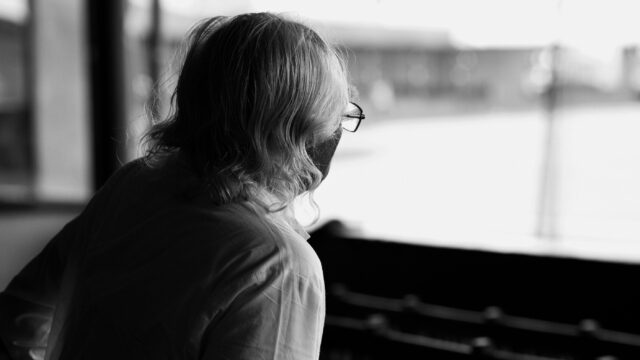
Chandra Schaffter opened the bowling for Ceylon against England in 1954. He recalls a period when club cricket in Sri Lanka was organised almost entirely along communal lines: Sinhalese, Tamil, Moor, Burgher, Malay, Parsi, Bohra. Membership was often restricted to those of a particular community.
Yet he remembers these divisions not as sites of hostility but as the basis for what he describes as “the friendliest rivalry that one could see.” The clubs were social spaces as well as sporting institutions. They nurtured talent, sustained competition and, in his account, gave shape to Sri Lankan cricket.
Over time, membership rules relaxed. Performance demanded openness. The clubs changed, as the country did.
I met Chandra Schaffter at the Tamil Union Sports Club. For nearly forty years, it had been the only ground in the country equipped to host international matches, with a covered pavilion and a manual scoreboard that, he told me, the Madras Cricket Association later copied. This was where he opened the bowling for Ceylon in 1954. He had been a member ever since.
His family history traced another journey. His grandfather, Peter Adolphus, had come from southern India in 1870 as a catechist assisting a missionary priest named Schaffter on the plantations. The family retained the priest’s name. Settlement, faith and migration were woven quietly into the story of cricket.
We walked through the pavilion corridors past photographs and names of former Tamil Union players. I asked him what he thought now of clubs once organised along ethnic lines. To me, such structures seemed exclusionary. He did not agree. The rules had relaxed over time, he said, and that was natural. But in his view the clubs had sustained the game and built its standards.
Later, I stepped onto the grounds and spoke with the staff who maintained the pitch and operated the old scoreboard. Like the players today, they came from different communities. The pavilion held layers of history at once.
Colombo
February 21, 2012


Transcript and translations
Language
"Sathasivam, who in my view was probably one of the best batsmen who ever lived"
Even prior to independence the Sri Lankan team used to play these same… same visiting teams. Don Bradman came and played here… he didn’t play, he played in ’48… he played in ’48, but he passed through. Woodfull’s team of ’30. Woodfull’s team of ’34. I think a couple of English teams played before. Oh, they’ve been playing here from the early 1900s… on their way to Australia and the Australians on their way back. Don Bradman, Walter Hammond… they were both two outstanding… Larwood. O’Reilly…they were the names you remember out of the whole galaxy of cricketers who passed through. Later on, of course, Lyndwall and Miller.
We had many Tamil players at that time who were outstandingly good. Of course, the most outstanding was probably M. Sathasivam, who was in my view one of the best batsmen who ever lived. There was Sathya Coomaraswamy who was a good all-rounder, both as a batsman and a bowler. He captained Sri Lanka. Sathasivam captained Sri Lanka against Don Bradman’s visiting team. We had bowlers like Selvadurai, Dharmalingam. We had brilliant batsmen like Kasippillai. We had quite a lot of good cricketers. Sethupathy who played for Sri lanka. So Tamil Union made a significant contribution towards Sri Lanka cricket in the ‘20s and the ‘30s, and probably the ‘40s as well.
As the number of clubs grew bigger and bigger and bigger, you found players from the outstations getting more chances. And naturally the opportunities for Tamil Union players diminished. And that was one thing that… the same way that in the ‘50s and ‘60s, before that the bulk of the cricketers who played for Sri Lanka were from Royal and St. Thomas’, sometimes seventy, eighty per cent of them were from…
As time went on and as fittingly it should have been so cricketers from Ananda and Nalanda began to find their way. Stanley Jayasinghe was one of them. But then the outstation schools started taking to cricket. Particularly after we got international status, cricket received a major fillip.
And of course, then you found the outstation talent was very, very good. And people like Marvan Atapattu, Sanath Jayasuirya. A whole host of them are all…our SurangaLakmal comes from an outlandish place in the Hambanthota district, from Deberawewa. But they have done well because they got the opportunity and, of course, the incentive to play cricket, because now they know if they do well, they can play for Sri Lanka and there’s a lot of money in it. You make more money than many others in the mercantile sector so it’s worth trying for, especially if you’re a poor lad. One might say it is a changing face of the game in the country.
Leave a comment