The Cricketer
Chandra Schaffter
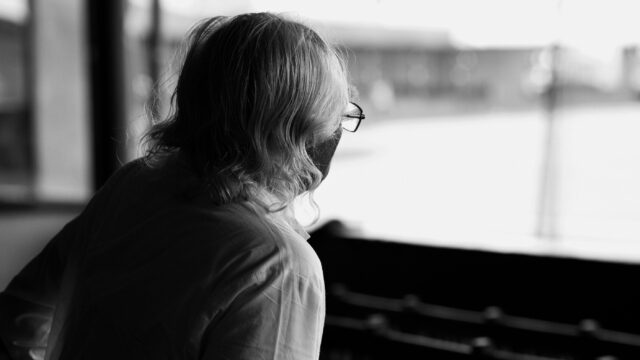
Chandra Schaffter opened the bowling for Ceylon against England in 1954. He recalls a period when club cricket in Sri Lanka was organised almost entirely along communal lines: Sinhalese, Tamil, Moor, Burgher, Malay, Parsi, Bohra. Membership was often restricted to those of a particular community.
Yet he remembers these divisions not as sites of hostility but as the basis for what he describes as “the friendliest rivalry that one could see.” The clubs were social spaces as well as sporting institutions. They nurtured talent, sustained competition and, in his account, gave shape to Sri Lankan cricket.
Over time, membership rules relaxed. Performance demanded openness. The clubs changed, as the country did.
I met Chandra Schaffter at the Tamil Union Sports Club. For nearly forty years, it had been the only ground in the country equipped to host international matches, with a covered pavilion and a manual scoreboard that, he told me, the Madras Cricket Association later copied. This was where he opened the bowling for Ceylon in 1954. He had been a member ever since.
His family history traced another journey. His grandfather, Peter Adolphus, had come from southern India in 1870 as a catechist assisting a missionary priest named Schaffter on the plantations. The family retained the priest’s name. Settlement, faith and migration were woven quietly into the story of cricket.
We walked through the pavilion corridors past photographs and names of former Tamil Union players. I asked him what he thought now of clubs once organised along ethnic lines. To me, such structures seemed exclusionary. He did not agree. The rules had relaxed over time, he said, and that was natural. But in his view the clubs had sustained the game and built its standards.
Later, I stepped onto the grounds and spoke with the staff who maintained the pitch and operated the old scoreboard. Like the players today, they came from different communities. The pavilion held layers of history at once.
Colombo
February 21, 2012


Transcript and translations
Language
"They were hoping that I would be the first doctor in the family"
(Laughs). Studying medicine is a part probably I wouldn’t want to talk about, because I lasted just one year. Before that, of course, I went to St. Thomas’, where I studied. I did reasonably well in studies and perhaps better than well in sports. I ended up as captain of cricket, and I played three or four games in which I won my colours. I left as a head prefect of the school. So I think I had a fairly good school record.
In the university also, I played both cricket and hockey and won my colours, but I didn’t have the same success with my studies, so I decided to give it up after one year. I was doing my pre- medical exam and I gave it up. I had the choice of becoming a dentist, but I thought, let me go out into the world and seek my fortune. So I left the university after a year and got on my own. Also, the other thing is that I was depending totally on others to fund me. I had absolutely no resources on my own and I couldn’t expect people to fund my continued failures. So I thought the best thing for me to do is to get a job and then see how it works.
The funny thing is I did study at the university more than I did in school, but still I couldn’t make it.
But I did study quite hard. But again, I lived about seven, eight miles away from the university. That’s about twelve kilometres away. There were no buses. The bus service in the early ‘50s was horrendously poor, so you had to leave home one and a half hours early. Then you took another one and a half hours to get back. And all that didn’t help. It didn’t help at all the environment and I realised that I was not going to make it so I thought the better thing is to — one might use the word — cut your losses and start something else.
It was certainly not exciting. I think it was very embarrassing that I had to leave the university. It is embarrassing that I’d failed my exam. But I had to live a face up to it and I thought, let me make the best of it and start going out on the road and looking for a job.
Most of my relatives who were helping me along in the university must have been very, very disappointed. Though some of them told me, some didn’t, because they were hoping that I would be the first doctor in the family. Because we come from a very poor background. To get a job as an executive was something we couldn’t aspire to. It was only I who, because of my schooling background and my sporting background, who had even a chance to do that. And when I failed getting into the university — or rather getting into the medical college — it was a big appointment to all my relatives. Then that was it and I had to learn to live with it.
Leave a comment