The Sister
Irene Bartelöt
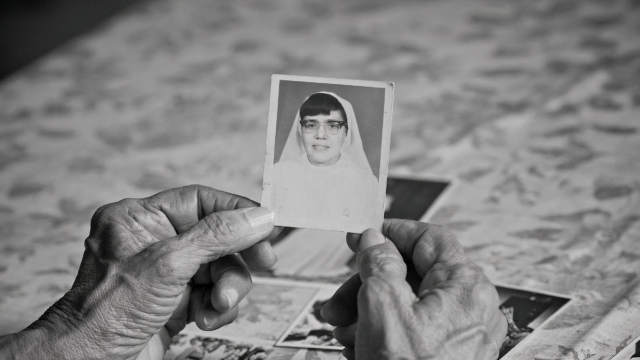
With Sri Lankan, Portuguese and French roots, Sister Irene Bartelöt has long been part of the layered social fabric of Batticaloa. She recalls a time when people did not ask about ethnicity or nationality, when, as she puts it, people “just mixed up.” That memory remains central to how she understands the town and its history.
Her decision to enter religious life followed what she describes as a quiet, persistent calling. During the years of war, she worked as a nurse in Batticaloa, tending to those injured by violence. She speaks of that time without drama. Care, in her account, was practical and repetitive, washing wounds, sitting at bedsides, remaining present.
Her life traces how vocation, kinship history and place intersect in a town repeatedly marked by conflict, yet sustained by ordinary routines of service.


Transcript and translations
Language
Subjects discussed
"We never used the word Sinhala or Tamil"
My grandmother was a real French lady. French people are really a little strong and I think I inherited most of… most of my… these things from her. Whatever it was. She was a strong lady. I think I am like her in most of the… the way I talk and the way I listen. My mother used to say that.
So when she plucked coconuts or something like that, she would call us and we would go there and have a nice feast with her and then come back. That was Opode, where St Theresa’s convent is. And we were living in town at that time, near the college, on Green Street.
Those days it was British times. People were all mixed up. Portuguese… all these nationalities used to come for trade and things like that, no? So maybe my grandfather met her that way, because people were mixing a lot. We even had a neighbour who was an Englishman. Everybody told me that. My parents told me that.
At that time you had no differences among people. No nationalities and names and all that. Everybody was free. You talked to everybody. You never even asked what nationality someone was. You never asked, are you Sinhala or are you Tamil? It never even came into our heads because it was not the thing to ask. At that time everybody was simply everybody.
We had a Sinhala teacher in school, at St Cecilia’s. And that’s all. We spoke to her in English. Whether people were Tamil or Portuguese or whatever it was, English was the language that was used. Of course some people who had not studied spoke Tamil. Tamils spoke their own language. But we picked up Tamil as well, because our neighbours spoke to us and we also had to learn one subject in Tamil at school. That was important.
I tell you, I am sincere in what I say. It never came into our heads that you are Sinhala and I am Tamil. No. We just mixed with everybody.
Only we never changed our dress. My father was strict about that. Even if we liked it, because a friend of mine used to go out wearing thavani and things like that, my father did not like it. But otherwise he was not particular about languages or anything. Most of his friends were Tamils. But in those days we never kept even that record of such things.
I had no idea who my grandfather was. Anyway I know he was not a foreigner. But my grandmother clearly was. Maybe my elders knew, I suppose. I don’t know. And I never asked the question, because it never came into my mind that there were differences between these people and that.
Leave a comment