The Chief Priest
Sri Nagulesawara Kurrukkal
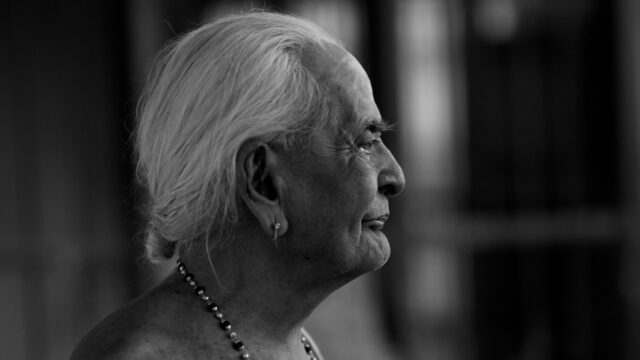
Sri Naguleswaram Kurrukkal, chief priest of the historic Naguleswaram temple at Keerimalai, reflects on the temple’s great festivals, the devastation of the surrounding area during the war, and the gradual return of pilgrims in recent years.
Our first challenge was getting through the military checkpoint at Tellipalai without attracting attention. The Naguleswaram temple lay inside what had long been a high security zone. I had telephoned ahead and arranged to meet the chief priest, but we were unsure whether we would even be allowed to reach the temple.
My father and I wore traditional Tamil verti and passed ourselves off as pilgrims. Our driver Esan answered the young soldier’s questions calmly and, after a tense moment, we were waved through.
The road beyond revealed the scars of the war. Bombed-out houses stood half reclaimed by jungle. Soldiers watched from sentry points along the roadside. In the distance the abandoned Kankesanthurai cement factory loomed — silent since the 1990s.
At last we arrived at Keerimalai and the Naguleswaram temple, one of the most sacred Hindu temples in Sri Lanka. Despite the devastation around it, the temple grounds were filled with pilgrims. Many had travelled from the south as part of a wider pilgrimage across the island.
The chief priest was busy blessing an endless line of devotees. Hours passed while we waited. Eventually the crowd began to thin as pilgrims moved towards the dining hall for annathaanam.
Just then another obstacle appeared — the priest’s wife, determined to escort her exhausted husband to lunch. My father quietly explained the situation: if she succeeded, the priest would eat, sleep, and the interview would never happen.
What followed felt almost theatrical — the priest walking ahead, his wife following closely behind, my father negotiating gently beside her, and me trailing behind with the recorder.
Finally, after the last devotee received a blessing, the Kurrukkal turned to us and said it was time to talk.
Hungry and visibly tired, he spoke about the temple’s past. Once the great Rathotsavam festival had drawn thousands of devotees for fifteen days of celebration. Now the surrounding villages lay empty, reduced to shrubs and overgrown ruins.
When the interview ended, the priest’s wife finally led him away to lunch. I walked down to the Keerimalai tank and slipped into the cool water.
After everything we had seen along the road that morning, the moment felt like a small blessing.
Jaffna
November 15, 2010


Transcript and translations
Language
Subjects discussed
"We used to have a temple like that."
I am speaking from the sacred Keerimalai Naguleswaram temple, home of the all mighty Lord Naguleswarar and goddess Nugulumpika. I thank you for asking me to talk about how the temple was then and the situation now.
In those days, this temple’s Ratham festival — the Ther Thiruvila or the Rathotsavam — was celebrated on a grand scale where five chariots were pulled by devotees.
Back then, there were many devotees who lived nearby. But now only a few shrubs and bushes remain.
In those days, the festival was celebrated for fifteen days.
For the first three days, we worshipped Lord Ganesh. On the fourth-day, we worshipped Lord Subramanyar or Lord Murugan. On the fourth-day, we worshipped Lord Subramanyar or Lord Murugan. Thousands and thousands of devotees used to come for the festival.
We used to have a temple like that.
Comments
Leave a comment