The Tobacco Farmer
Veerakathy
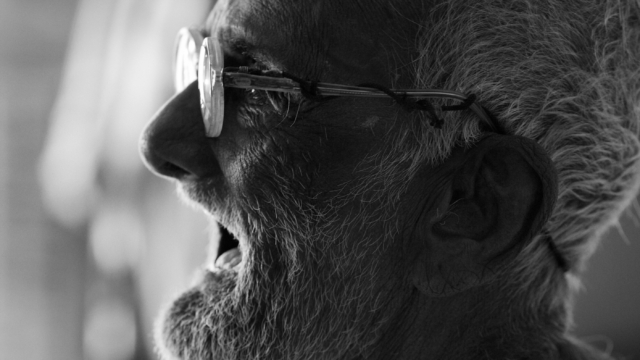
At 105 years old, Veerakathy was widely regarded as one of the oldest men in Jaffna. Born in 1906 in Velanai, he left as a child to work in Galle before returning in 1920 to farm tobacco and coconut. He married in 1930 and raised eight sons and four daughters. Six of his sons have since died. “I am still here,” he said, without emphasis.
His days followed a steady rhythm: milk tea at dawn, breakfast mid-morning, rice in the afternoon, tea again in the evening. Asked about longevity, he offered no explanation mentioning instead what he enjoyed — fresh toddy from the palmyrah, a measure of arrack, crab, cuttlefish, kool.
When I began the project, I wanted to meet those whose memories reached furthest back. Veerakathy, then 105 years old, was said to be the oldest man in Jaffna. He was also, by coincidence, a grand uncle to my mother.
I travelled to Velanai with a bottle of Mendis arrack, having been told it was his preferred drink. His house stood among tobacco and coconut plantations. The family was observing a thivasam, a ritual marking the death anniversary of one of his sons. Veerakathy has outlived six sons and now lives with his wife, daughters and grandchildren.
Despite the ceremony, he agreed to speak briefly. He described his years as a farmer and outlined his daily routine with precision. His memory moved across decades without emphasis.
I had come searching for longevity as a form of archive. In his account, identity was tied to land, labour and kinship, sustained through repetition rather than declaration.
At the end of the conversation, he wished me a long life.
Jaffna
October 26, 2010


Transcript and translations
Language
Subjects discussed
"But I am still here"
I was born in 1906. I moved to Galle when I was ten years old and ran a shop there. In 1920, I came back here and started farming. I got married in 1930. When we had three sons, my wife observed kanthsashdi viratham *, so we could get daughters (laughs). Then I got four daughters! (Laughs).
I have 8 sons. Six of them are dead…two are still living. But I’m still here… I have no complaints. My children look after me well. At five o clock I have my milk tea…then a plain tea around nine o’clock. Then at ten, they give me a good breakfast. At around one, I get rice. In the evening, a cup of tea and some string hoppers, pittu or thosai, whatever is there.
The toddy tapper sells fresh toddy, as soon as he gets it from the panai. It has an incredible taste. I also take arrack. I drink… (Laughs). I eat meat… I eat cuttlefish, crab and kool **. (Laughs).
Those days, I bought a piece of land for 75 cents, now that is worth 25,000 rupees. I bought one egg for two cents, now it’s twenty rupees. Paddy was four cents. Rice was imported to Galle from India. Muthusamba rice was ten cents, seeraga samba nine cents and raw rice was eight cents. Now how much for a kothu *** of paddy? Times have changed. What can we do?
One man says only those who commit sins live longer, because they won’t be reincarnated at the right time. But another says only people who have done good in their past lives get a long life. Which is right? I don’t know.
* kanthsashdi viratham is a period of fasting observed by Hindus for six days during late October or early November.
** kool is a traditional Jaffna broth made from palmyrah flour and seafood.
*** A kothu is a traditional scale used to measure paddy.
"But I am still here"
Comments
Leave a comment